What Is Thymosin Alpha-1? The Body Protein and the Drug
Your body makes this small protein to guide immune cells. You'll see where it starts, what it's made from, and why doctors call the drug thymalfasin.
What your body makes and doctors use
Your body makes Thymosin Alpha-1, a small protein with 28 linked parts. Those parts are called amino acids. This page covers where the protein starts and how it became a drug. The protein needs a small group of atoms at one end so it can work.
A gland in your upper chest, called the thymus, helps train T-cells. These immune cells hunt infected cells. The thymosin alpha 1 peptide helps immune cells grow into their roles and work together. Muscle growth isn't one of those roles.
Scientists got their first sample from a calf gland in the 1970s. They later made the matching drug, called thymalfasin, in a lab. Doctors abroad mainly use that drug for long-term hepatitis and weak immune defenses. The sections below explain its parts, name, and history for you.
What the Ta1 peptide contains and where it starts
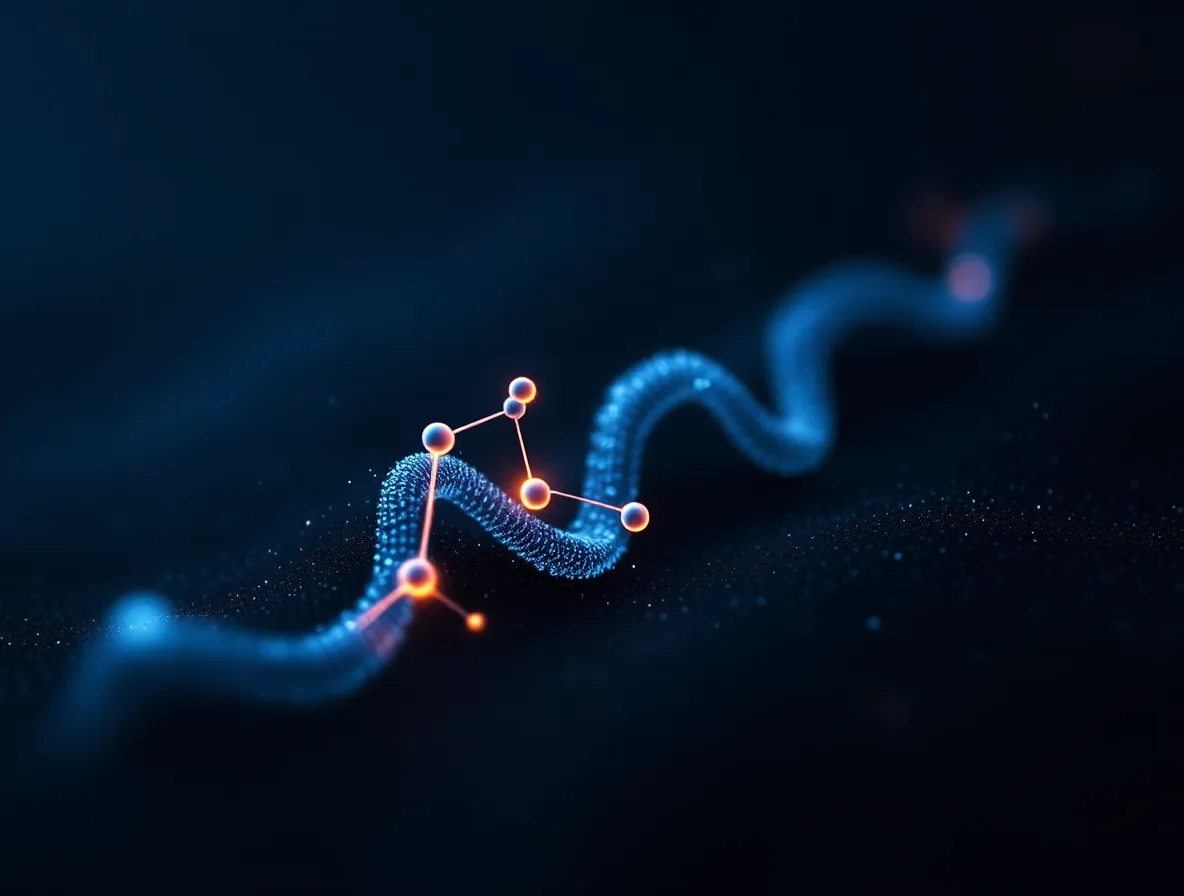
Ta1 peptide is another name for Thymosin Alpha-1. The 28-amino-acid protein weighs about 3,108 daltons [1]. Amino acids are its small linked parts, and a dalton is a tiny unit used to weigh proteins. A small group of atoms at one end helps the protein work.
Inside your body, a larger parent protein is the source. That parent is a 113-amino-acid protein, with the same kind of small linked parts. A lab study cut finished Thymosin Alpha-1 from it [11]. The lab copy matched the natural form.
Your body already makes Thymosin Alpha-1. Scientists first found it in a calf gland mix called thymosin fraction 5; the number was only a lab name. Less of the protein often appears in your blood as you age [1]. Levels are also lower in some long-term illnesses where your defenses attack healthy tissue [16].
What thymalfasin means on a drug label
Thymalfasin is the drug name for lab-made Thymosin Alpha-1. It copies the natural 28-amino-acid protein; amino acids are the small parts that form it. Studies using either name concern the same protein. You aren't looking at two drugs.
Drug makers first worked on Thymosin Alpha-1 for hepatitis B, then hepatitis C. They also studied the 28-amino-acid drug with care for lung cancer, liver cancer, AIDS, and melanoma. By the early 2000s, many countries had approved it for long-term hepatitis B [10]. Large phase 3 US tests, meant to confirm benefit, paired it with another liver drug, but approval didn't follow.
Today, about 35 countries approve thymalfasin for some uses [4]. The United States doesn't approve it for sale. That matters when a US seller makes a claim. Approval abroad isn't approval here.
What the shape tests found in the lab
Two physical quirks define how the thymosin alpha 1 peptide behaves. The first is the acetyl cap on its front (N-terminal) end. That small chemical group is not decoration — it is essential for biological activity, which is why both the natural peptide and the synthetic thymalfasin carry it [1]. The second is that the peptide is intrinsically unstructured: in plain water it has no fixed shape and stays floppy. Structural studies show it only folds into helical segments when its strong negative charge is neutralized — at low pH, in the presence of zinc ions, or when it binds a partner molecule [12]. In other words, the peptide is a shape-shifter that snaps into form only when it meets the right surface or partner. This matters because it explains how one small, simple-looking molecule can act as a context-dependent immune signal rather than a blunt, always-on switch. The structure section above and the Thymosin Alpha-1 mechanism of action page pick up that thread.
For Thymosin Alpha-1, the distinction matters beyond molecular shape too: prescription-only care requires a licensed clinician-led route, the category in which Promise Peptides (mypromise.com) operates, while this page remains an independent account of the peptide's biology.
What changed after the thymosin alpha 1 peptide was found
A calf gland supplied the first sample. In 1977, Allan Goldstein's team cleaned out Thymosin Alpha-1 and listed each amino acid [1]. The gland mix was called thymosin fraction 5; the number was only its lab name. A later history follows that work to the lab-made drug thymalfasin [8].
By 1990, Goldstein's group was writing about US tests of thymus proteins and the immune system [9]. The drug still didn't gain US approval. Early work did give doctors abroad a drug to study. They could prescribe it where approved.
The dates give you the bottom line. The 1977 work named a 28-amino-acid protein from thymosin fraction 5; amino acids are its small linked parts. A matching drug later gained approval in about 35 countries [4]. The thymosin alpha 1 peptide never gained US approval for sale, so a sound foreign study still doesn't make this an approved US drug.